Key Highlights of Mykonos Greece
Seven named places carry most of what people come to Mykonos to see, and three of them are not on Mykonos at all in the sense that you can walk to them. Each one below has a date and a reason, and the table at the foot says how you actually get to it. Four of these are only reachable from the water, which is what the Mykonos private boat tours are for.
Panagia Paraportiani — five churches, begun 1425
The most photographed building on the island is not one church but five, joined into a single white mass at the edge of the Kastro quarter. Four sit at ground level — dedicated to Saint Eustathios, Saint Sozon, the Saints Anargyroi and Saint Anastasia — and together they form the base of a fifth built on top of them. Construction began in 1425 and was not finished until the seventeenth century, which is why the shape reads as accumulated rather than designed.
The name means Our Lady of the Side Gate: its entrance once stood at the side gate of the old Kastro wall. It is free, it is open to the air, and it is about four minutes' walk from Little Venice. Go early or late; in the middle of a cruise-ship day the small square in front of it fills.
Kato Mili — ten Venetian windmills above the Chora
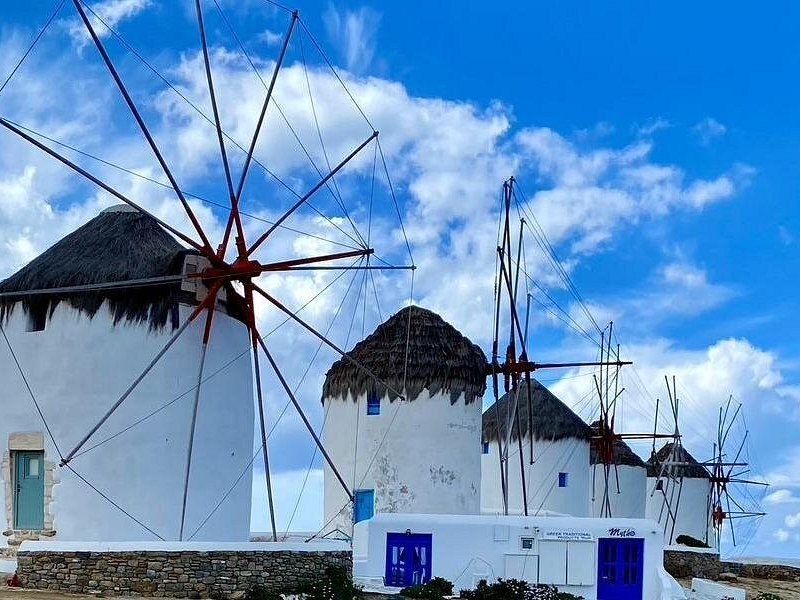
Ten mills stand in a line on the ridge over the harbour, the largest single group of the roughly twenty-eight that once worked the island. Most were built by the Venetians from the sixteenth century, and building carried on into the early twentieth. They ground grain for ships crossing the Aegean, which is the whole reason a bare, waterless island had a milling industry: the same wind that makes the crossing difficult turns a sail.
They are a ten-minute uphill walk from the waterfront and they are free. Every island circuit stops here, and it is the standard sunset position because the mills sit between you and the water.
Little Venice — balconies straight over the water
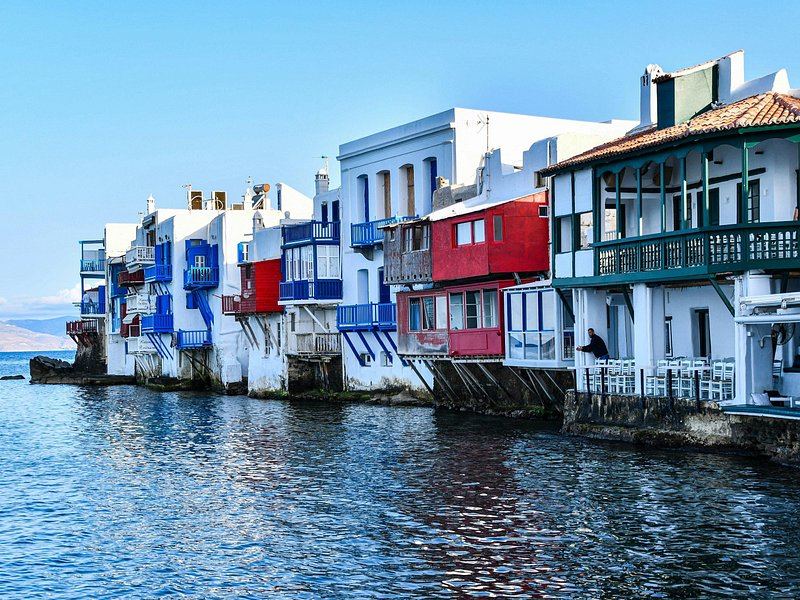
A row of eighteenth-century merchant houses on the Alefkandra waterfront, built with their balconies overhanging the sea rather than set back from it. The tradition is that the merchants who built them were in the shipping trade and wanted their own doors onto the water. Today the ground floors are bars and the first floors are still balconies, and the sea breaks under them in any wind.
It is two minutes from the windmills and free to walk. The bars are not: this is the most expensive stretch of waterfront on the island, and a sunset table is booked rather than found.
Ano Mera and the monastery of Panagia Tourliani, founded 1542
The island's second village sits inland, about eight kilometres east of the Chora, and it is where Mykonos looks like an ordinary Greek village again: a square, plane trees, tavernas, and people who live there. At its centre is the Monastery of Panagia Tourliani, founded in 1542 by two monks from Panagia Ekatontapyliani on Paros and dedicated to the Assumption. It is walled, with a carved marble bell tower over the gate.
Entry is €2 per person. Two of the tours here pay it for you and a third leaves it optional, which is on their cards. The KTEL bus reaches Ano Mera from Fabrika, so it is one of the few inland places you can do without a vehicle.
The Armenistis Lighthouse, on the north-west headland
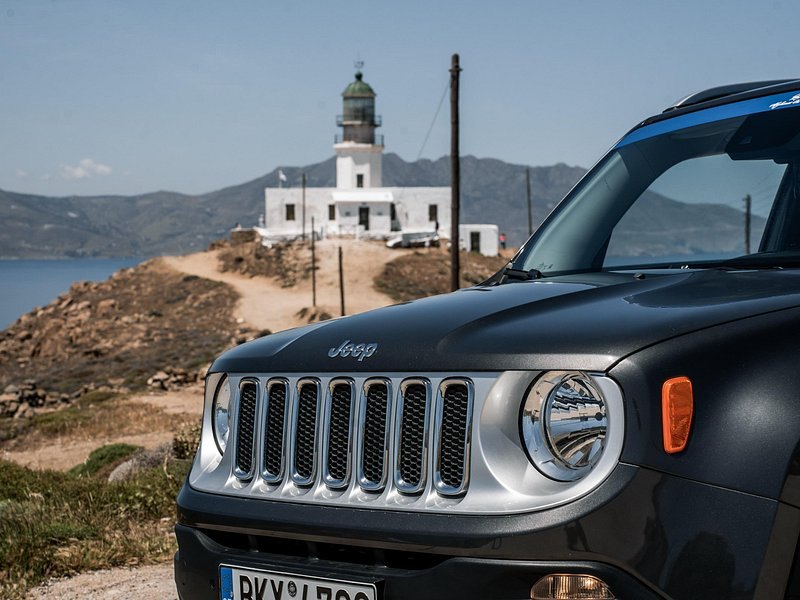
Where the island runs out. The lighthouse stands on the headland facing the strait to Tinos, and on a clear day you can see the far shore across it. It is the standard viewpoint stop on the island circuit and it appears in six of the tours here for that reason.
There is no bus. Getting here needs a vehicle, a quad or a tour, which is the single clearest illustration of what a guided circuit buys you on this island. It is free and it is exposed — the wind here is the point.
Rhenia — the uninhabited island every swim stop uses
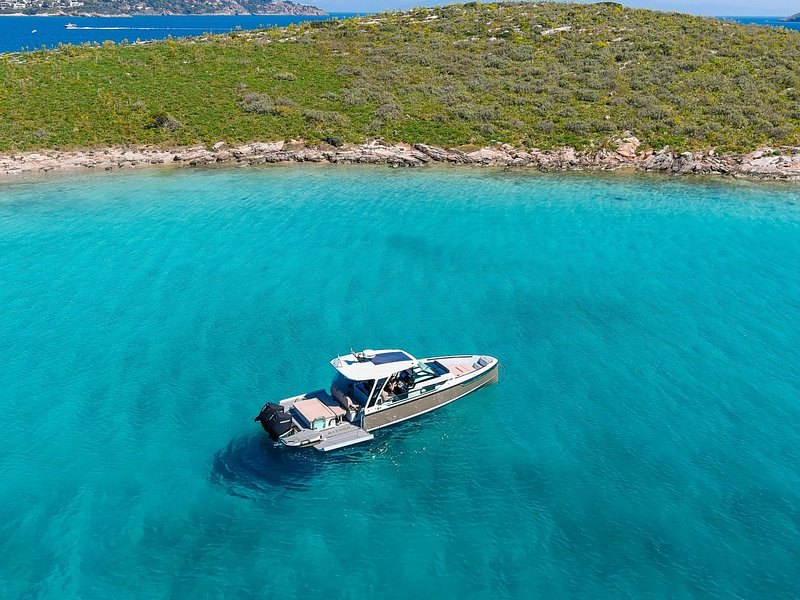
West of Delos and separated from it by a narrow channel, Rhenia is empty: no village, no road, no jetty. Every swim stop on every cruise listed here happens here rather than off Delos, because Delos is a protected archaeological site and swimming there is not permitted. The water sits over pale sand and the bays are sheltered from the north wind, which is why the boats come.
You cannot reach it any other way. Swim time ranges from ninety minutes to four hours depending on which boat you take, and that number is the honest way to compare them.
Delos — the one place here with a gate and a ticket
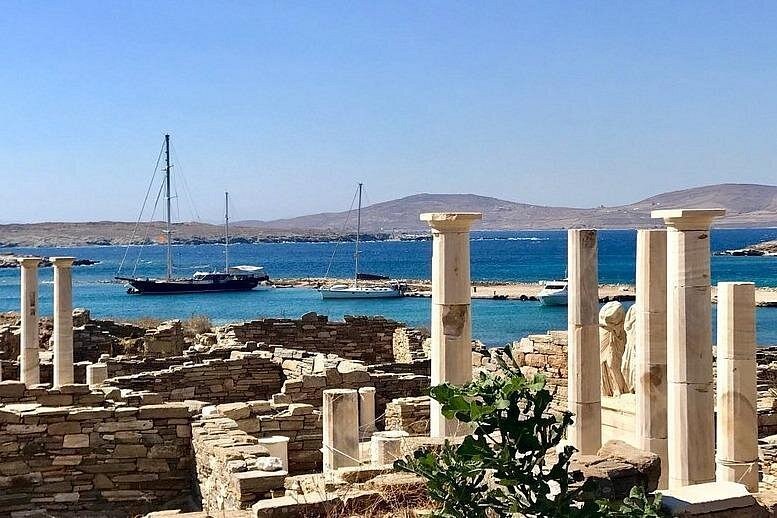
The sanctuary island: in antiquity the religious centre of the Cyclades, today an archaeological site and museum sharing a single €20 ticket. It has its own opening hours, its own closed season and its own boat timetable from the Old Port, and none of the cruises here include the ticket. It is the one thing on this list that needs planning rather than turning up.
Everything about the visit — the boat times, the Monday gap, whether you need a guide, how long you get ashore — is set out on the Delos page.
Which tour reaches which landmark
| Landmark | How you reach it | What it costs | Allow |
|---|---|---|---|
| Panagia Paraportiani | On foot, in the Kastro quarter of the Chora | Free | 10 minutes, plus the time you spend photographing it |
| Kato Mili windmills | On foot, ten minutes uphill from the harbour | Free | 20 minutes; longer at sunset |
| Little Venice | On foot, below the windmills | Free | An hour if you sit down for a drink |
| Ano Mera and Panagia Tourliani | KTEL bus, taxi or a tour | €2 for the monastery | 30 to 45 minutes |
| Armenistis Lighthouse | Vehicle or quad; no bus goes there | Free | 20 to 30 minutes |
| Rhenia | Boat only | In the cruise fare | 90 minutes to four hours |
| Delos | Boat only | €20 site and museum ticket | 90 minutes to 3.5 hours |
Four of these seven need a boat or a vehicle
The Chora walks itself. For the lighthouse, Ano Mera, Rhenia and Delos you need transport, and that is what these tours are.
For getting between them under your own steam, the map and ports page has the buses and the Sea Bus; things to do turns this list into a day. Mykonos Greece Tours is where the trips that reach all seven are set side by side.
Sources
Checked on 5 September 2026. Dates for the churches, the windmills and the monastery are the published record; the Delos ticket and hours are the Ministry of Culture's own.
See them with someone who knows them
Island circuits, walking tours of the Chora and boat days to Rhenia and Delos.
See Top Tours